







The Evolution of Google Veo: From Veo 3 to Veo 3.2
Understanding Veo 3.2 requires looking at how Google’s video models have evolved.
Veo 3 (Mid-2025) – The Audio Breakthrough
Veo 3 marked a major milestone in generative video.
| Prompt | Sample Video |
|---|---|
| A knife is used to cut a pudding-like strawberry on the table. The camera gradually zooms in until the cut-off strawberry tip falls onto the table. | 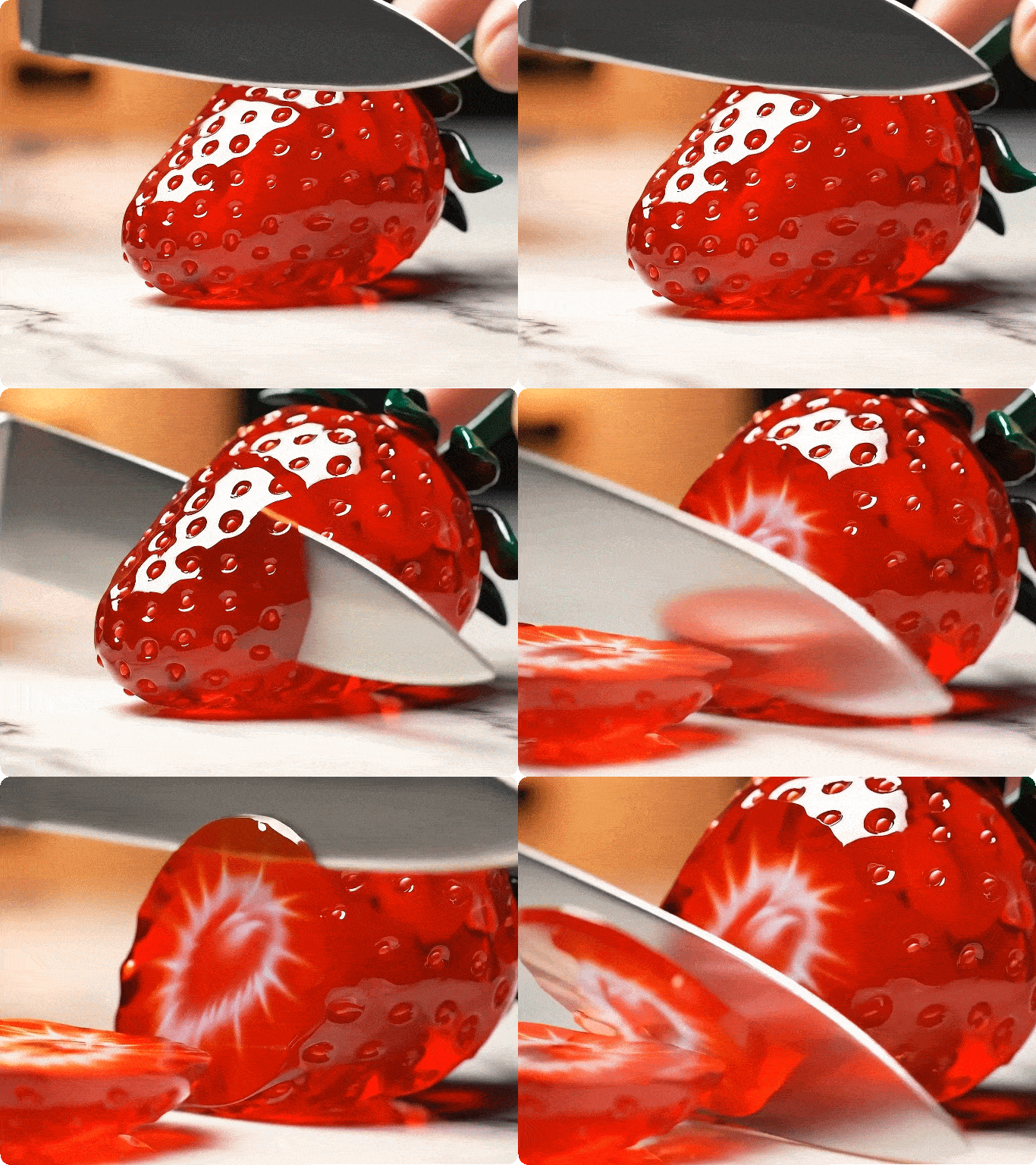 |
Key upgrades included:
- Native synchronized dialogue
- Built-in sound effects and ambient audio
- Improved human motion realism
- Stronger prompt adherence
- ~8-second generation limit
- 720p / 1080p outputs
For the first time, AI video felt cinematic rather than silent and stitched together. Veo 3 moved generative video into the “talkies” era.
Veo 3 Fast – Speed Over Fidelity
| Prompt | Sample Video |
|---|---|
| Two people are weaving through the woods on a motorcycle. The camera is being shot from behind. The rider in front is performing various difficult driving maneuvers at high speed. Sunlight shines on the figures from the upper right corner. |  |
To support iteration workflows, Google introduced Veo 3 Fast. This version focused on:
- Lower latency generation
- Faster preview rendering
- Reduced physics precision
- Lower API costs
It became ideal for creators who needed rapid experimentation, though it sacrificed some realism and fine detail.
Veo 3.1 – Production Polish
| Prompt | Sample Video |
|---|---|
| The camera pans through a futuristic, high-tech building, then focuses on a robotic fly throwing a stone to the ground. Earth is visible to the right foreground, while sunlight shines on the left. A rainbow halo appears in the image. | 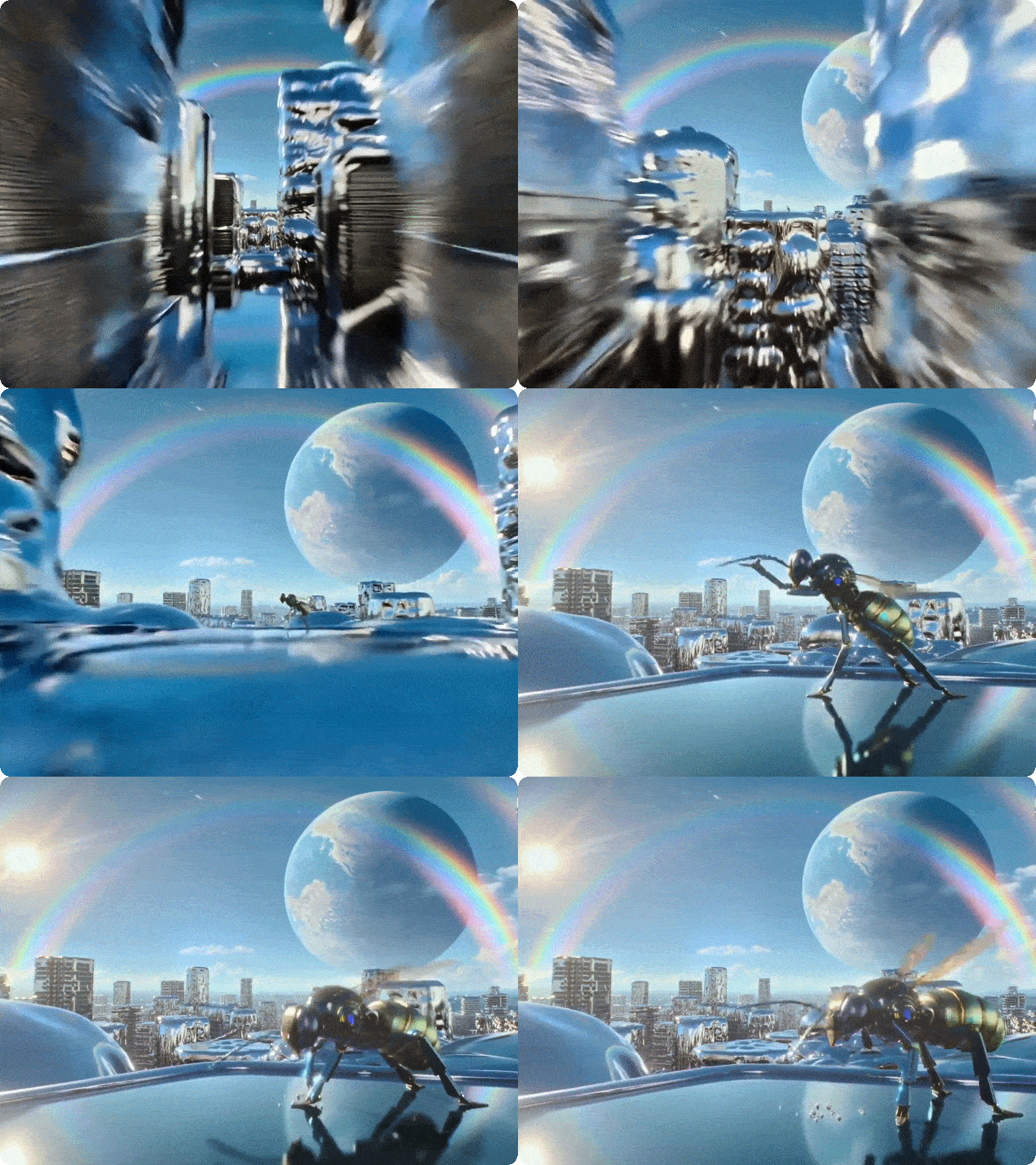 |
Veo 3.1 refined the system for practical use cases. Improvements included:
- 9:16 vertical video support (perfect for Shorts and TikTok)
- Enhanced “Ingredients to Video” character blending
- Better 4K upscaling
- Improved stability across frames
- Deeper Gemini + Workspace integration
Veo 3.1 didn’t reinvent the engine — it polished it for real-world production.
Veo 3.2 – The Artemis Leap
| Prompt | Sample Video |
|---|---|
| Two armored vehicles are chasing each other through the sandstorm. The vehicle behind is equipped with a machine gun and cannon, and artillery fire is coming from behind it. The camera then follows the vehicle behind until the end of the scene. | 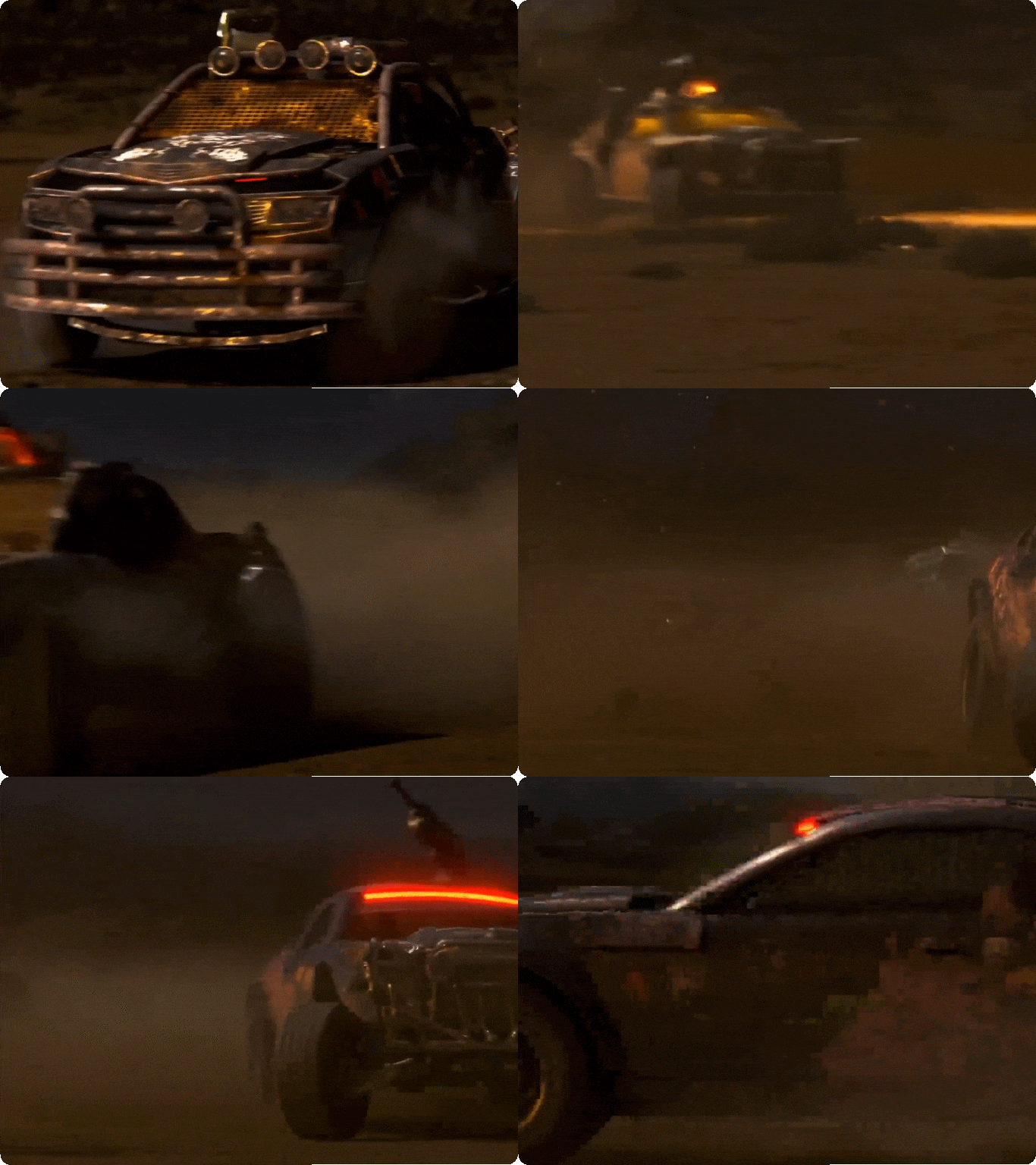 |
Veo 3.2 appears to be a structural overhaul. Leaked features include:
- Artemis engine architecture
- World Model physics simulation
- Enhanced Spacetime Patches
- Up to 30-second native generation
- Advanced identity consistency
- Improved audio realism
This is not incremental — it is foundational.
What Is the Artemis Engine?
Previous AI video models relied on frame-by-frame pixel prediction. They statistically guessed what the next frame should look like. That approach caused common issues:
- Warping objects
- “Jelly-like” water
- Extra fingers
- Background inconsistencies
The Artemis engine reportedly introduces a World Model — meaning the AI understands 3D space and physical behavior. Instead of predicting pixels, it simulates:
- Gravity
- Fluid dynamics
- Object permanence
- Spatial consistency
For example: Old AI: A glass hits the floor → it bends unnaturally.
World Model AI: A glass hits the floor → it shatters into fragments following gravity.
This shift from prediction to simulation could dramatically reduce artifacts.
World Model Physics: Why It Changes Everything
The World Model concept is the most important rumored upgrade.
1. Fluid Dynamics
- Water splashes behave naturally.
- Snow compresses under weight.
- Smoke disperses realistically.
2. Collision Realism
Objects break, bounce, or fall according to physical logic.
3. Object Permanence
- Items don’t disappear when moving out of frame.
- Characters remain consistent when turning.
4. Spatial Awareness Over Time
The AI remembers 3D relationships across longer sequences.
Compared to:
- Veo 3 → basic physics
- Veo 3.1 → improved consistency
- Veo 3.2 → full simulation layer
This is a different class of systems.
30-Second Native Video: The Duration Breakthrough
Length has been a major limitation of generative video.
| Version | Max Native Length |
|---|---|
| Veo 3 | ~8 seconds |
| Veo 3 Fast | ~8 seconds |
| Veo 3.1 | ~8 seconds |
| Veo 3.2 | Up to 30 seconds (Expected)s |
Veo 3.2 reportedly achieves this through:
- Enhanced Spacetime Patches (3D time-space processing blocks)
- Global Reference Attention (long-range memory)
- Improved temporal coherence
For storytellers, 30 seconds is transformative. It enables:
- Full dialogue scenes
- Product demos
- Narrative sequences
- Short-form advertisements
This moves AI video closer to practical filmmaking.
Ingredients 2.0: Multi-Shot Identity Consistency
Character consistency has been one of the hardest AI video problems.
Evolution:
- Veo 3 → basic reference blending
- Veo 3.1 → improved stability
- Veo 3.2 → 3D identity mapping
With Ingredients 2.0, users can:
- Upload 2–3 reference images
- Create a 3D mental model of the character
- Maintain identical face, outfit, and proportions across shots
For creators building stories or branded characters, this is critical.
Audio Evolution: From Veo 3 to Veo 3.2
Veo 3 introduced native audio. Veo 3.2 refines it significantly.
| Feature | Veo 3 | Veo 3 Fast | Veo 3.1 | Veo 3.2 |
|---|---|---|---|---|
| Native Dialogue | ✅ | ✅ | ✅ | Advanced |
| Lip Sync | Basic | Basic | Improved | Phoneme-accurate |
| Ambient Sound | Basic | Reduced | Improved | Material-aware |
| Room Acoustics | ❌ | ❌ | ❌ | Simulated |
New improvements may include:
- Phoneme-accurate lip sync
- Material-aware sound generation (snow crunch, metal resonance)
- Environmental acoustics (echo modeling)
Instead of adding generic audio layers, Veo 3.2 may generate sound physically aligned with visuals.
Release Date: When Will Veo 3.2 Launch?
While Google has not officially announced Veo 3.2, evidence includes:
- Backend API endpoints (veo-3.2-quality / standard)
- Deployment on new Ironwood TPUs
- Historical rollout patterns
Most analysts estimate: February – March 2026
Google typically follows this pattern:
- Silent backend deployment
- Limited enterprise testing
- Gradual API exposure
- Public announcement
Some users may already be interacting with early 3.2 builds without realizing it.
Veo 3.2 vs Veo 3, Veo 3 Fast & Veo 3.1
| Feature | Veo 3 | Veo 3 Fast | Veo 3.1 | Veo 3.2 |
|---|---|---|---|---|
| Engine | Standard | Optimized | Refined | Artemis |
| Physics | Basic | Reduced | Improved | World Model |
| Max Length | ~8s | ~8s | ~8s | 30s |
| 4K | Upscaled | Upscaled | Better Upscale | AI Reconstruction |
| Identity Consistency | Basic | Limited | Strong | 3D Persistent |
| Speed | Medium | Fastest | Medium | TBD |
Veo 3.2 is not simply a “better Veo 3.1” — it introduces architectural changes.
Pricing & Access Expectations
Based on current Vertex AI pricing trends:
- $0.20–$0.60 per second (estimated range)
- Fast Mode for previews
- Quality Mode for full physics rendering
Access will likely be:
- Enterprise-first
- Workspace-integrated
- API-based
- Possibly waitlisted for individuals